
Our Collection
Explore our handpicked artworks
 photo
photo
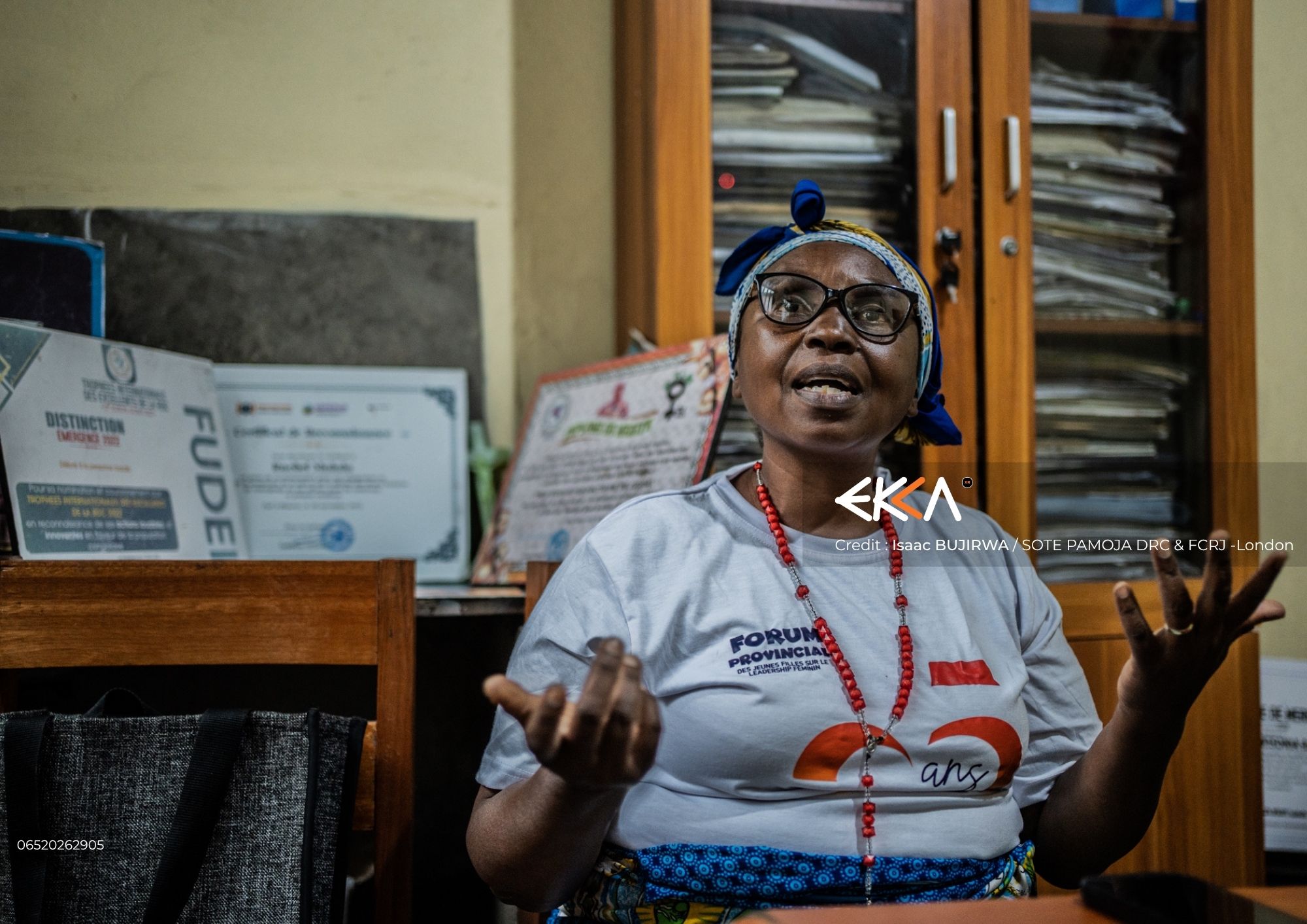
Rachel MALULU | From Survival To Governance
Rachel Malulu, coordinator of FUDEI (Femmes Unies pour le Développement Endogène et Intégral), speaks passionately at her office in Goma, North Kivu, Democratic Republic of Congo, on March 9, 2026. Behind her, certificates of recognition including a Trophée International des Excellences de la RDC and a FUDEI distinction line the shelves alongside stacks of organizational archives, bearing silent witness to over two decades of community-driven work in one of the world's most volatile regions. Wearing a Forum Provincial des Jeunes Filles sur le Leadership Féminin T-shirt, Malulu speaks with the urgency of someone who knows that the window for peace is always fragile, always contested. Her conviction that peace must be visible, tangible, and rooted in the communities where people actually live has made FUDEI one of Goma's most distinctive voices for women's empowerment and environmental peacebuilding at a time when the city's future remains deeply uncertain.
 photo
photo
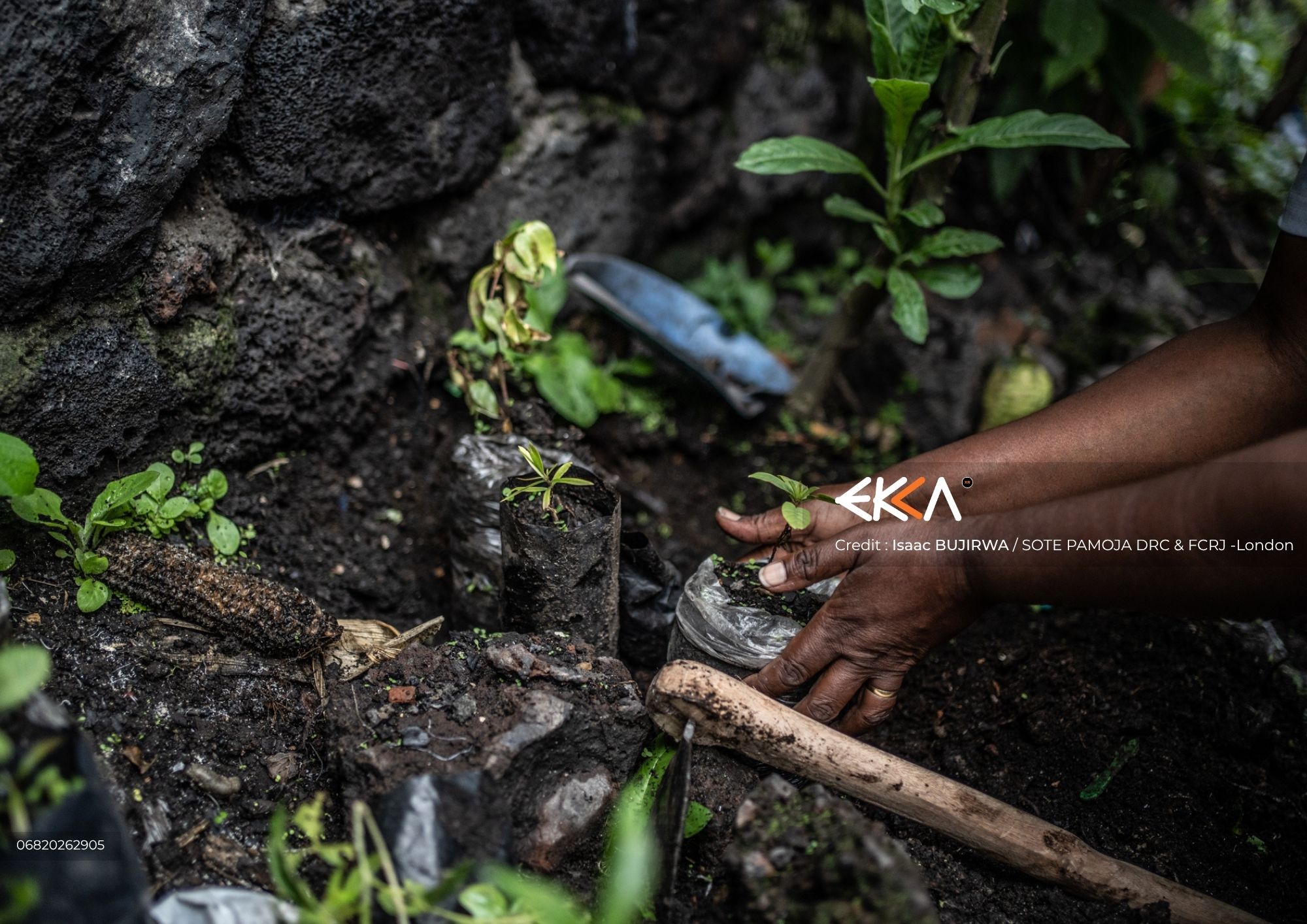
Peace Germinates in Volcanic Stone | From Survival To Governance
Hands carefully tend to seedlings planted in Goma's characteristic volcanic rock soil during a reforestation activity organized by FUDEI, the women's organization coordinated by Rachel Malulu, in Goma, North Kivu, Democratic Republic of Congo, on February 21, 2026. The image small green shoots pushing through black lava stone is a metaphor made real for Malulu's entire philosophy: that life, peace, and community resilience can take root even in the hardest, most damaged ground. Goma sits at the foot of Mount Nyiragongo, one of the world's most active volcanoes, and has been further scarred by decades of armed conflict that have stripped the region of both its forest cover and its social fabric. In planting trees here in this soil, in this city Rachel Malulu and the women of FUDEI are making a statement that no international communiqué has yet managed to make with equal clarity: Goma is still alive, and its women intend to keep it that way.
 photo
photo
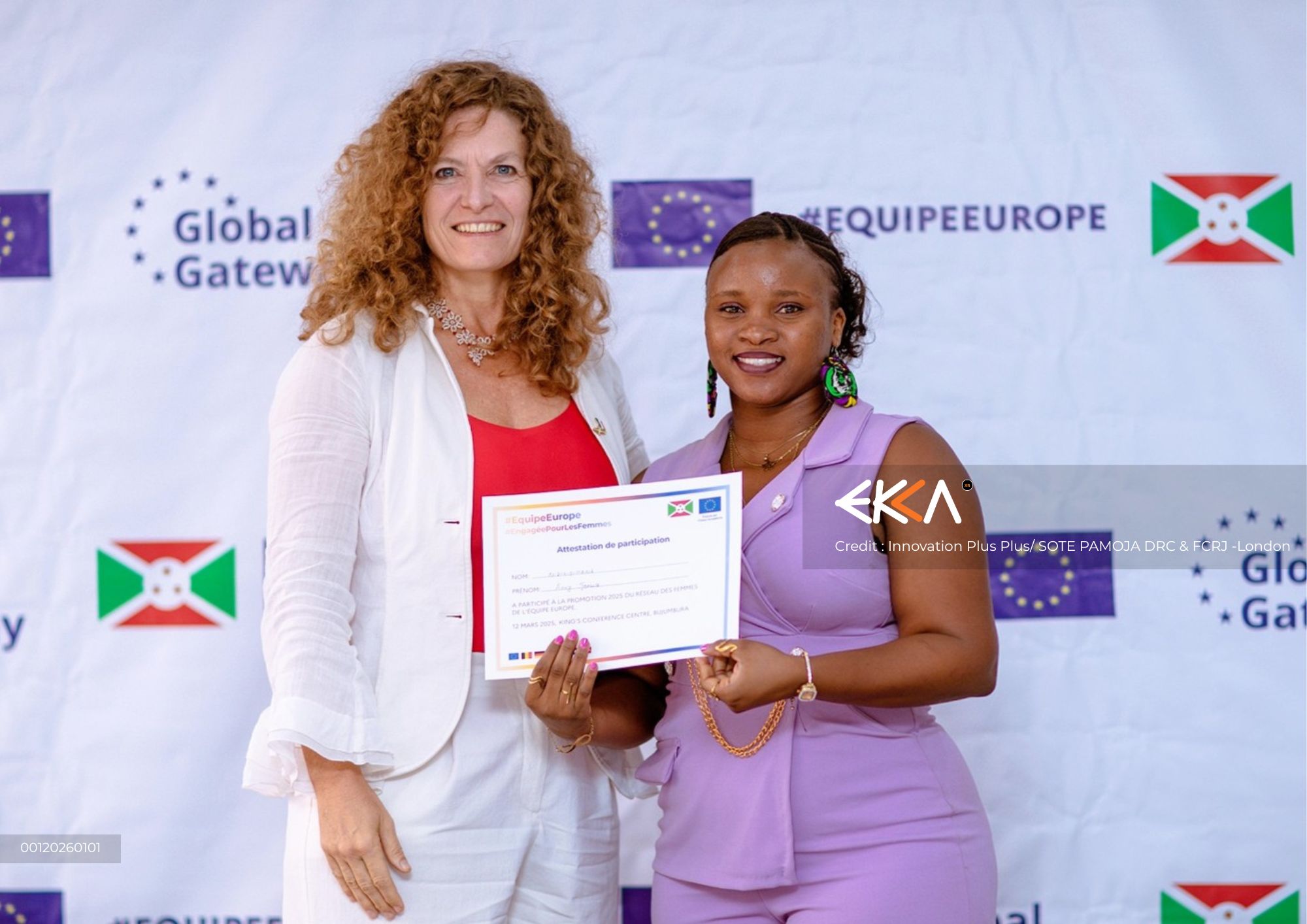
Anny Joanice | From Survival To Governance
Anny Joanice Nizigiyimana is a Burundian social entrepreneur, youth leader, and advocate for women’s economic empowerment who is redefining what leadership looks like for young women in the Great Lakes region. At a time when many young women face unemployment, economic exclusion, and limited access to opportunities, Anny chose to turn entrepreneurship into a tool for transformation. Through Innovation Plus Plus in 2020, the organization she founded, she has created pathways for women to move from vulnerability to economic independence by combining entrepreneurship, environmental sustainability, and innovation. Her work harnesses the power of eco-artistic recycling, transforming textile waste, used tyres, and plastic materials into products that generate income while promoting environmental responsibility. Beyond skills training, she equips women with the confidence, financial literacy, business knowledge, and leadership capacities needed to build sustainable futures for themselves and their communities. In 2023 Across Burundi, from Bujumbura to Gitega, Kayanza, Bubanza, and Ngozi, Anny has trained and mentored more than 200 women in entrepreneurship and supported dozens of young women to launch income-generating activities. Through her initiatives, women have gained access not only to skills and equipment, but also to opportunities to organise themselves into cooperatives, strengthen their economic resilience, and claim their place as active contributors to local development. Her impact extends far beyond the communities where she works. As a trainer, mentor, and coach, she has delivered more than twenty capacity-building programmes and reached thousands of young people through leadership initiatives, entrepreneurship training, advocacy campaigns, media engagements, and public dialogues. Her voice has been amplified through national and international media platforms, where she continues to champion women’s economic empowerment, youth leadership, and inclusive development. Anny also occupies leadership positions in several national, regional, and international networks dedicated to women’s entrepreneurship, youth leadership, and environmental action. Through these spaces, she advocates for greater representation of women and young people in decision-making processes and works to ensure that their voices shape the future of their societies. Her journey reflects a broader story unfolding across the Great Lakes region: young women are not waiting for change to happen, they are creating it. Through innovation, entrepreneurship, and collective action, Anny is helping build a generation of women leaders who are transforming barriers into opportunities and proving that economic empowerment is not only a pathway to independence, but also a pathway to leadership, influence, and social transformation.
 photo
photo
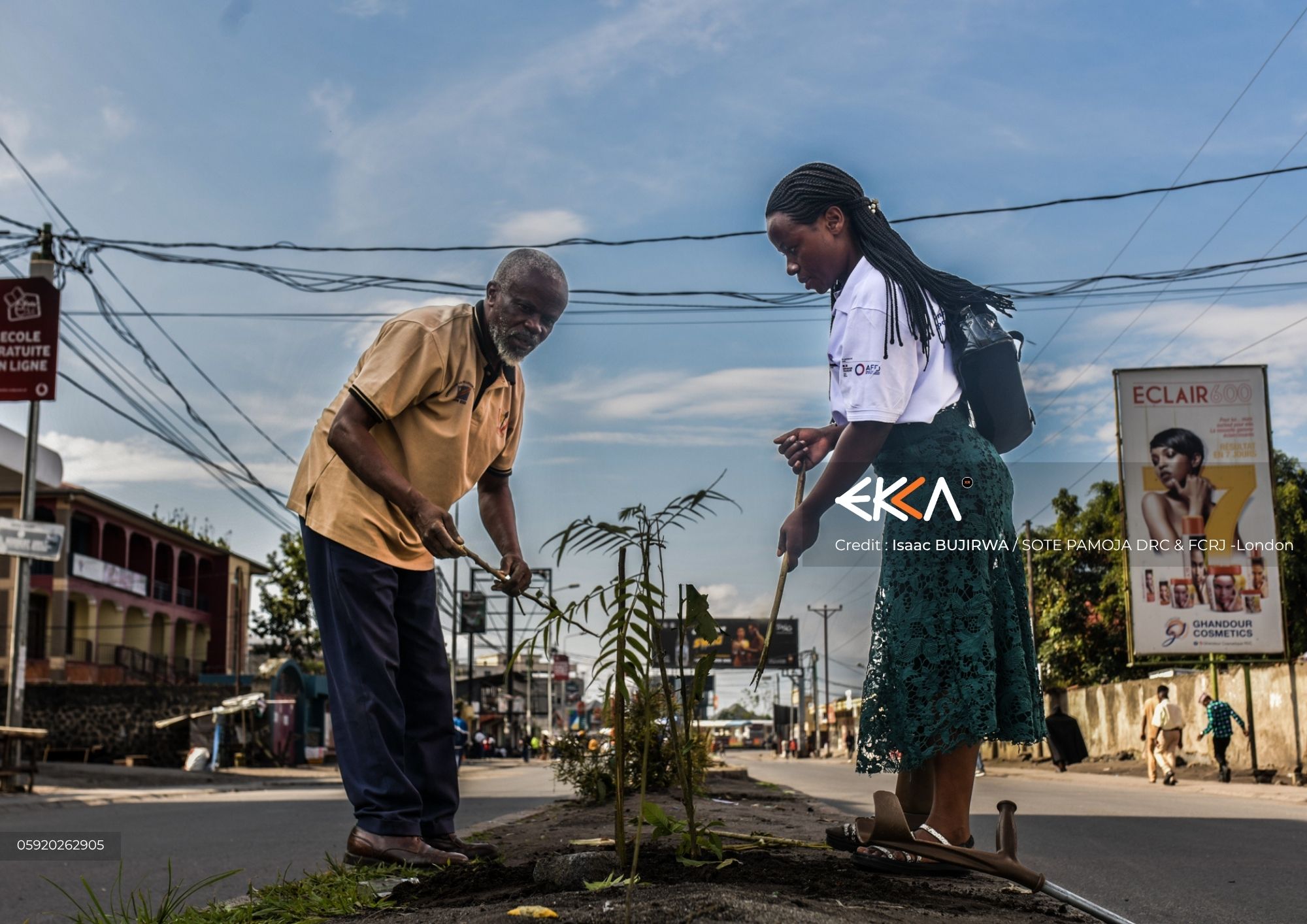
Generations Gathered Around a Tree ©Isaac Bujirwa | Sote Pamoja DRC & FCRJ London
A FUDEI volunteer and an elder resident of Goma tend together to a newly planted tree on a street median in Goma, North Kivu, Democratic Republic of Congo, on February 21, 2026. The image a young woman and an old man, side by side, nurturing a fragile sapling on the asphalt of a city that has known too much war distills the vision of FUDEI coordinator Rachel Malulu into a single, quiet frame. Under her leadership, FUDEI's tree-planting initiative has become more than an environmental program: it is an intergenerational, cross-community act of civic repair, drawing together Goma's residents around a shared stake in the city's future at a moment when eastern DRC's peace process remains fragile and the humanitarian needs of millions of displaced people continue to go unmet.
 photo
photo
SIGNERS | From Survival To Governance
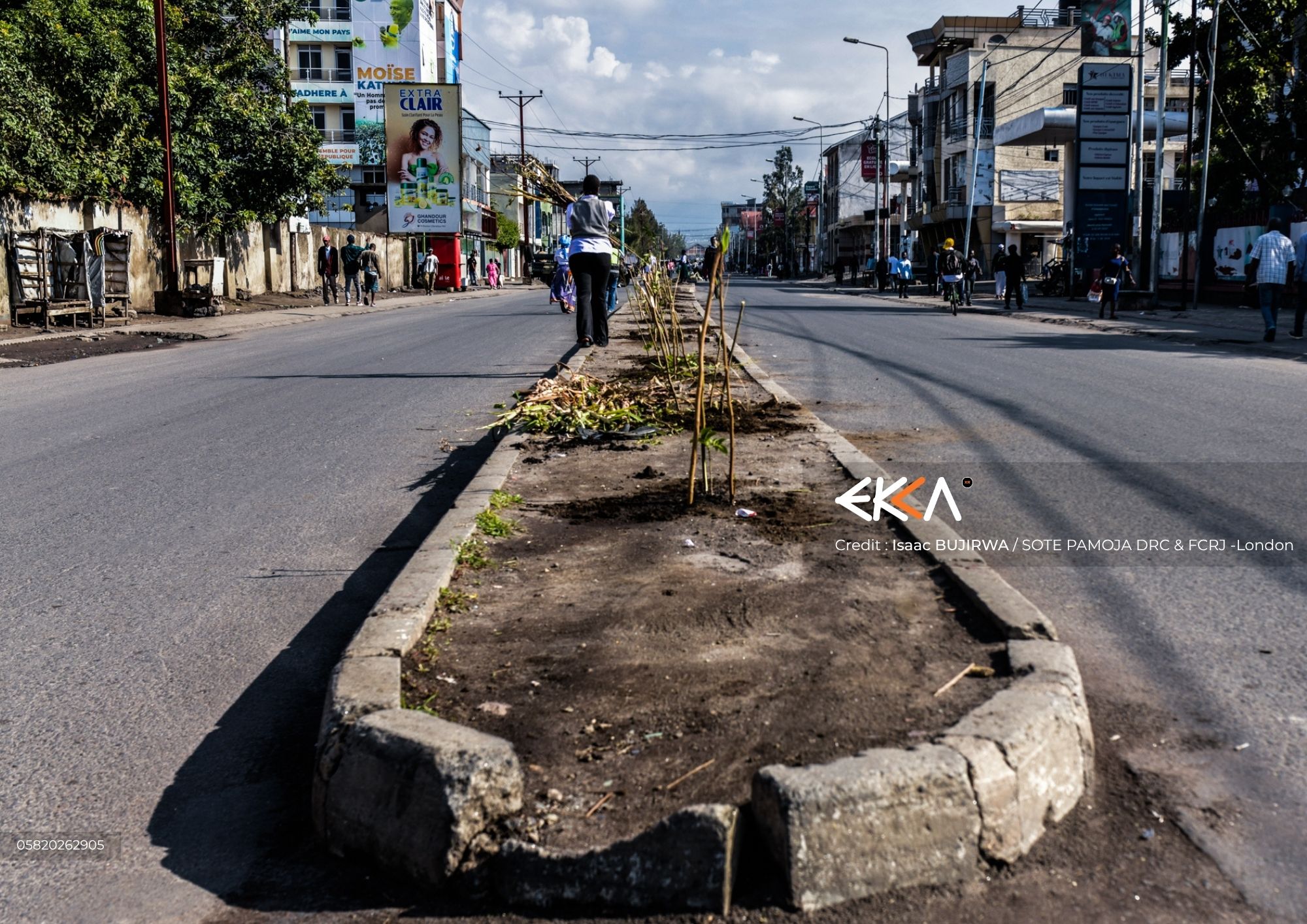
Freshly planted saplings line a street median in the heart of Goma, North Kivu, Democratic Republic of Congo, on February 21, 2026, following a community reforestation activity organized by FUDEI (Femmes Unies pour le Développement Endogène et Intégral) under the leadership of its coordinator Rachel Malulu. The long row of young trees small, vulnerable, stubbornly upright stretches toward the city's horizon like a declaration written in living wood. In a city repeatedly battered by volcanic eruptions, armed conflict, and mass population displacement, the greening of Goma's streets by Malulu and FUDEI members represents one of the most visible and defiant acts of community reconstruction underway in eastern DRC today. As the international community debates ceasefires and security guarantees, Rachel Malulu's answer to the question of how peace is built in Goma can be seen right here planted, watered, and growing in the median of a busy street, one tree at a time.
 photo
photo
BARAZA | From Survival To Governance
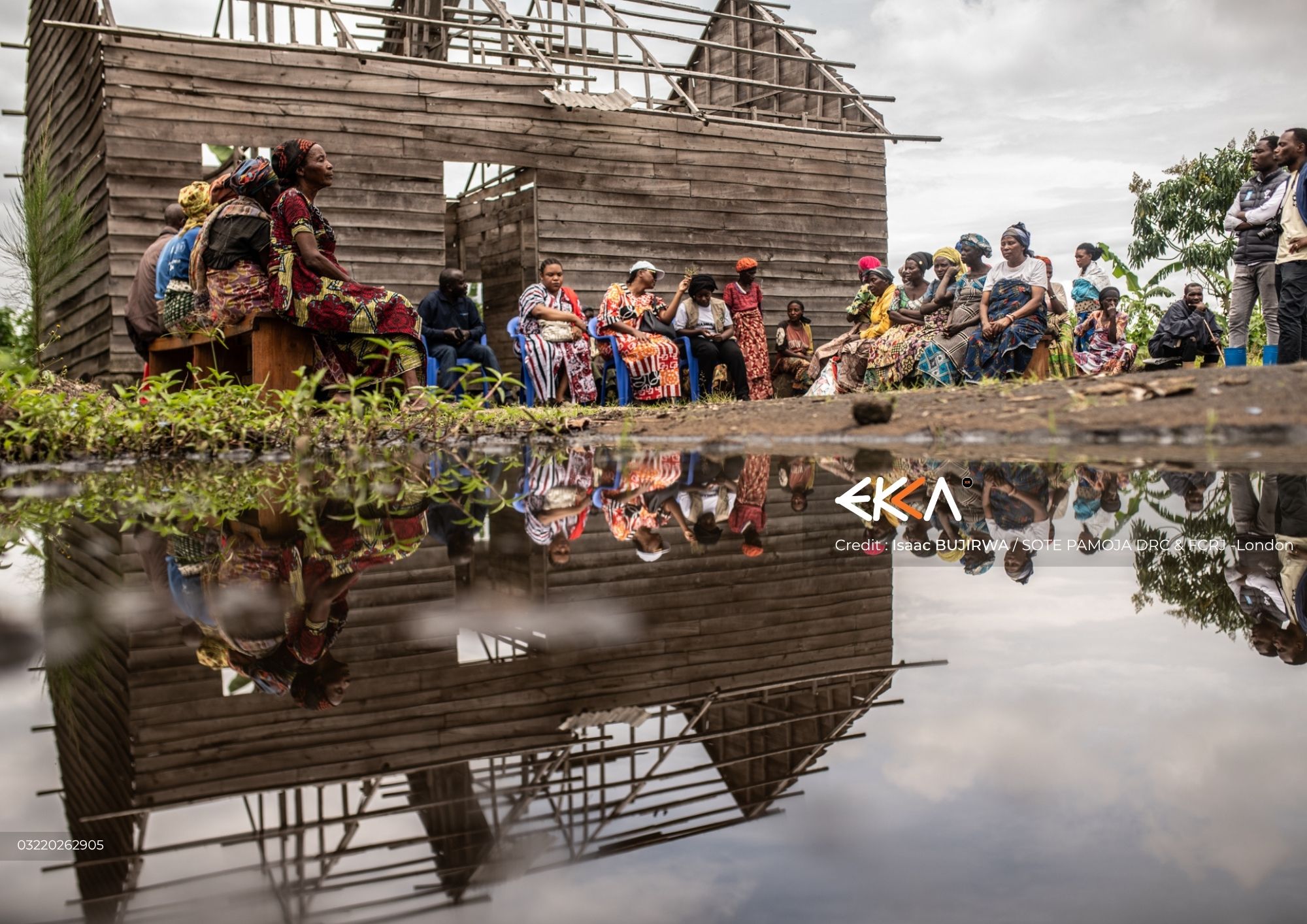
Women war returnees gather for a community meeting organized by Bahati Mubuya Gladys as part of the "Shamba la Amani" (Field of Peace) program in Mudja, Nyiragongo Territory, North Kivu, Democratic Republic of Congo, on April 6, 2026. Their reflection shimmers in a rainwater pool before a partially destroyed wooden building a haunting reminder of the violence that drove these women from their homes and set communities once bound by ethnic ties against each other. Under Gladys' leadership, Shamba la Amani brings together women and families from formerly opposed ethnic groups, uniting them around a shared agricultural field where mutual aid, food security, and peaceful coexistence are cultivated side by side. As eastern DRC's humanitarian crisis one of the world's most severe, with millions internally displaced continues to demand responses that go beyond military solutions, programs like this one offer a rare and replicable model of community-driven reconciliation rooted in the most basic of human needs: the right to feed one's family in peace.