
Our Collection
Explore our handpicked artworks
 photo
photo
She Stands for Peace | From Survival To Governance
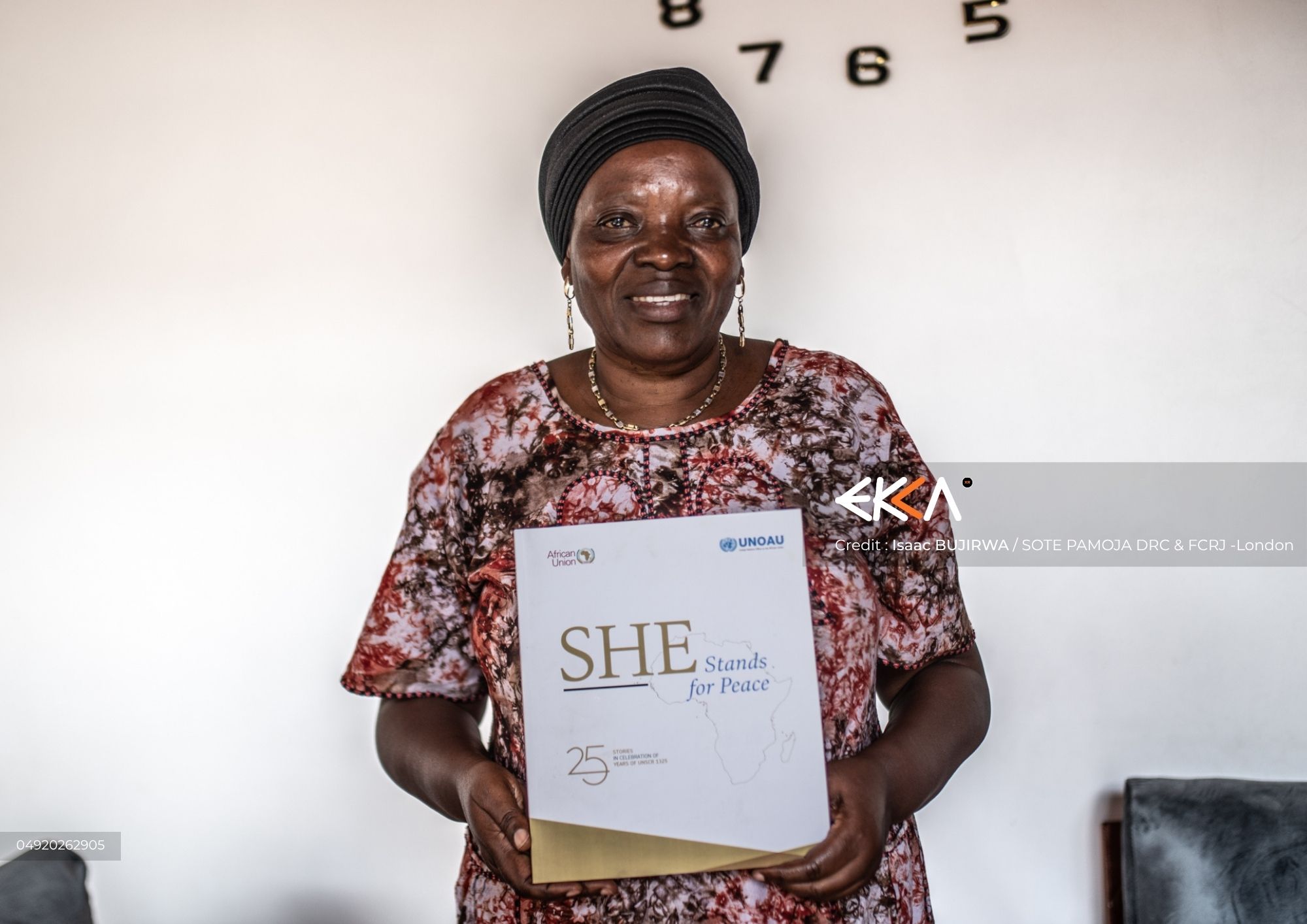
Liberata Rubumba Buratwa, 63, President of the Network of Women Ambassadors and Peace Mediators in Rutshuru, North Kivu, holds a copy of "SHE Stands for Peace" a commemorative publication jointly produced by the African Union and the United Nations Office of the African Union (UNOAU) marking 25 years of UN Security Council Resolution 1325 on Women, Peace and Security photographed in North Kivu, Democratic Republic of Congo, on April 3, 2026. Her inclusion in this landmark publication, which honors women peace leaders across the African continent, is a recognition of Rubumba's lifelong commitment to mediation, social cohesion, and the protection of survivors of violence in one of Africa's most enduring conflict zones. Resolution 1325, adopted in 2000, called for the full participation of women in peace and security processes a mandate that Rubumba has embodied through grassroots action in Rutshuru for more than two decades, even as armed groups continued to threaten the stability of North Kivu.
 photo
photo
One Face, Dozens of Merits | From Survival To Governance
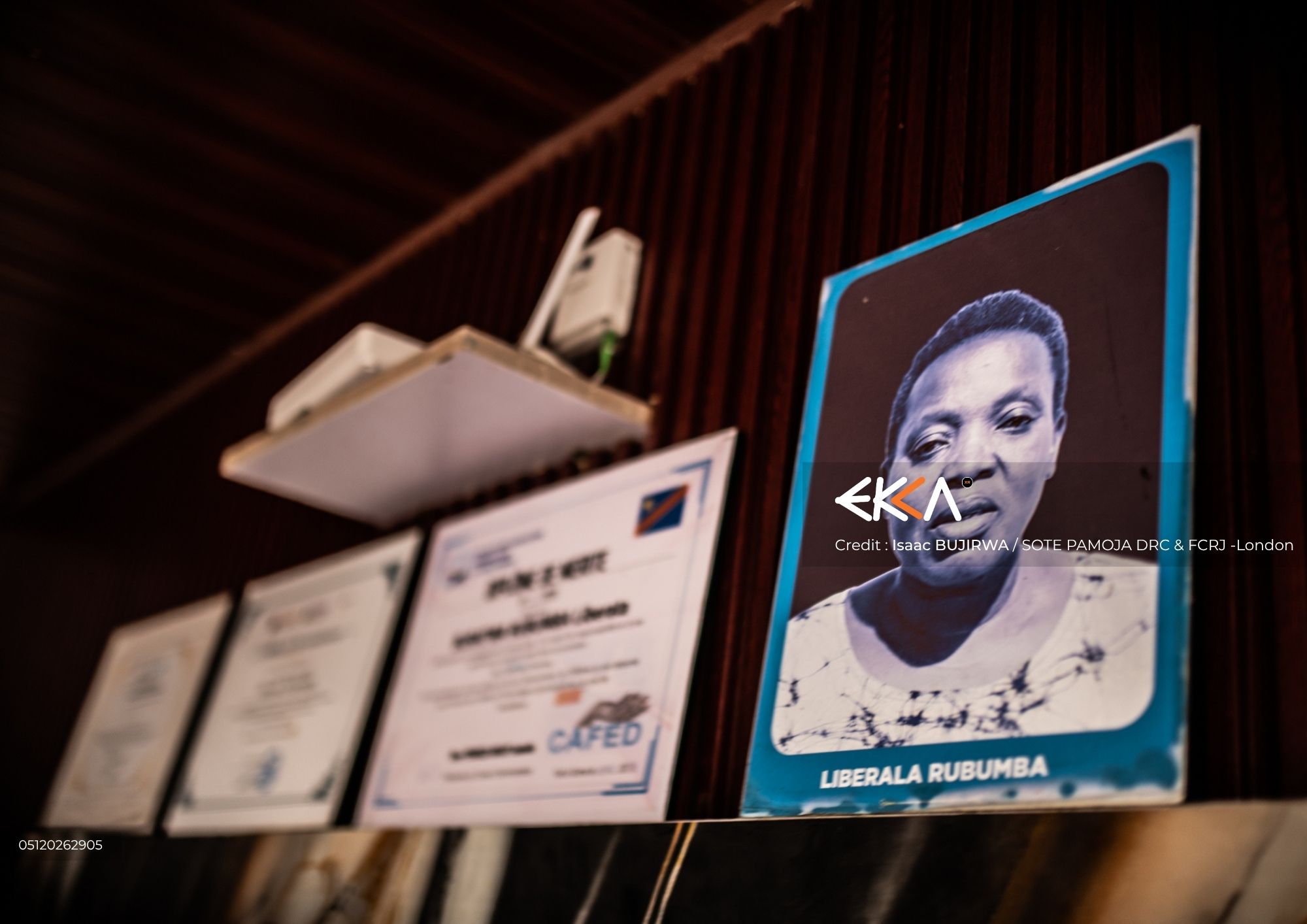
A framed portrait of Liberata Rubumba, peace mediator and community leader from Rutshuru, North Kivu, is displayed alongside certificates of recognition at her office in North Kivu, Democratic Republic of Congo, on April 16, 2026. The certificates including one issued by CAFED and the weathered photograph bearing her name speak to a career built not on institutional platforms but on the hard, daily work of community reconciliation, survivor support, and peace education in a territory that has been one of the epicenters of armed violence in eastern DRC for three decades. For Rubumba, now 63 and a former territorial administrator, each certificate represents not personal accolade but collective testimony proof that the women and communities of Rutshuru have refused to surrender their dignity to conflict, even when the world was not watching.
 photo
photo
The Quiet Resistance Bureau | From Survival To Governance
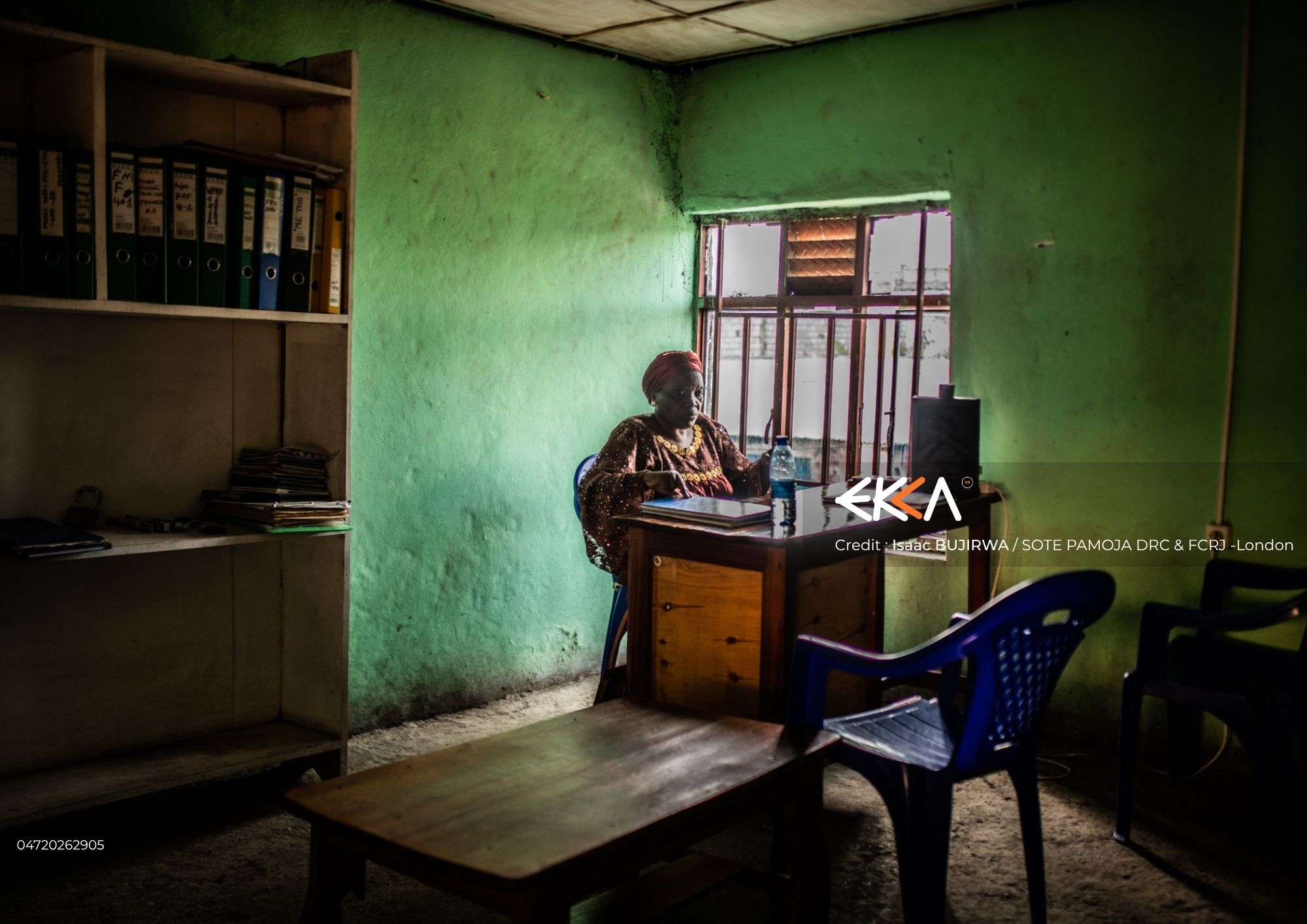
Liberata Rubumba Buratwa, 63, peace mediator and President of the Network of Women Ambassadors and Peace Mediators, works at her desk at the PACOFEDI offices in North Kivu, Democratic Republic of Congo, on April 16, 2026. In a sparse room its green walls bare, its shelves lined with carefully archived files representing years of community interventions Rubumba embodies the quiet, determined persistence of grassroots women's leadership in a region where institutional support remains chronically insufficient. A former territorial administrator turned civil society leader, she has dedicated her life to supporting survivors of sexual and gender-based violence, promoting education for girls, and weaving back together communities fractured by decades of armed conflict. As international peace negotiations for eastern DRC proceed at the regional level, the offices of women like Rubumba remain among the most vital and most underfunded spaces of peacebuilding on the ground.
 photo
photo
KAMUSONI Ingrid 3 | From Survival To Governance
"When a girl drops out of school because she is pregnant, that is not a personal failure. That is a systemic failure.
 photo
photo
The Gaze That Does Not Bend | From Survival To Governance
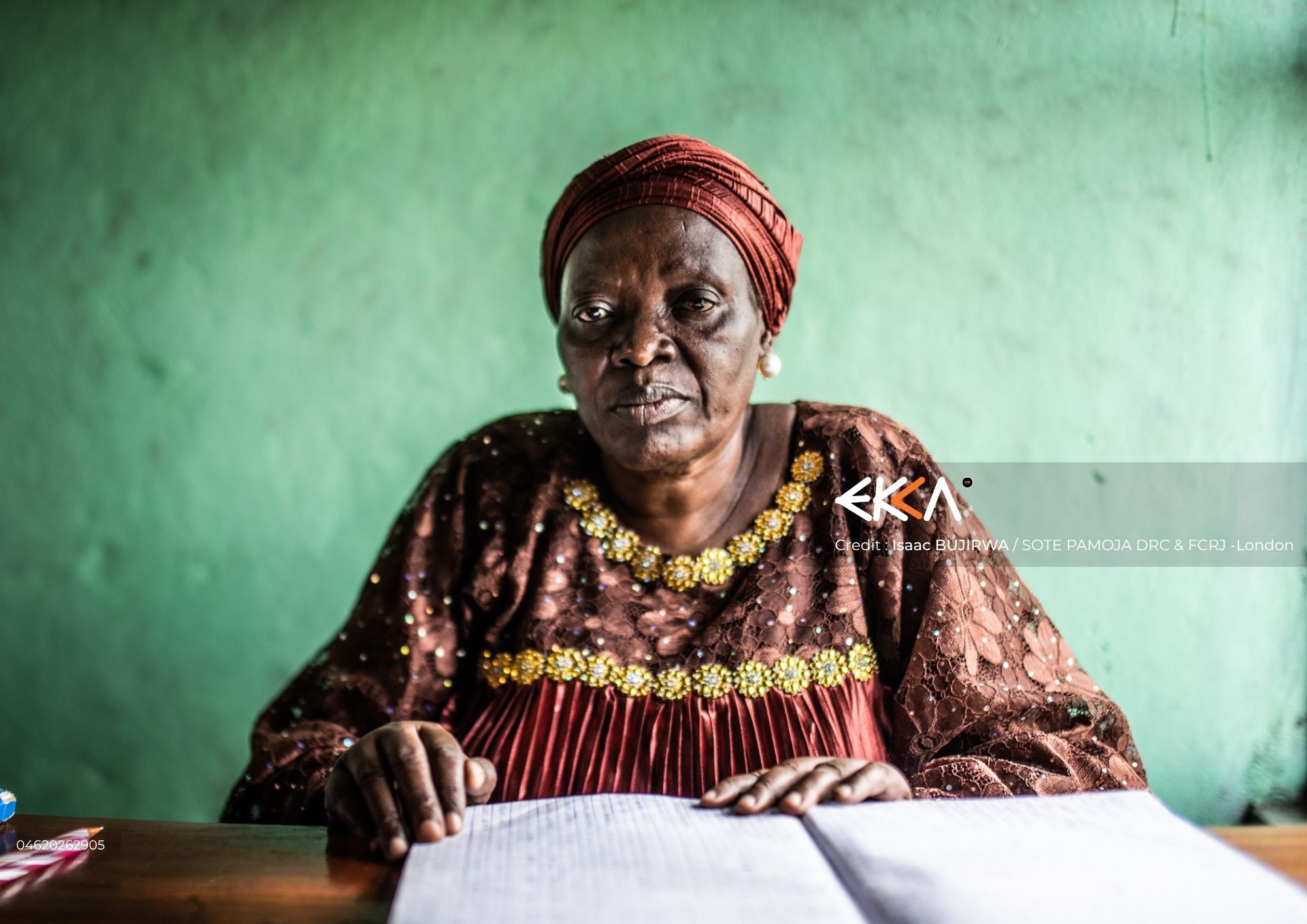
Liberata Rubumba Buratwa, 63, peace mediator, community leader, and President of the Network of Women Ambassadors and Peace Mediators in Rutshuru, North Kivu, is photographed at her office in North Kivu, Democratic Republic of Congo, on April 16, 2026. Her steady, unflinching gaze lined by decades of witnessing displacement, violence, and loss in one of the world's most protracted conflict zones carries the weight of a life given entirely to the service of others. A former territorial administrator who chose to remain and rebuild rather than flee, Rubumba has spent more than two decades supporting vulnerable women and children through PACOFEDI, mediating between communities torn apart by armed group activity, and insisting against all odds that peace in Rutshuru is not only necessary but possible. In a region where an estimated seven million people remain internally displaced and where women continue to bear the heaviest burden of conflict, her presence at that desk, every day, is itself an act of extraordinary resistance.
 photo
photo
The Hands That Build Peace | From Survival To Governance
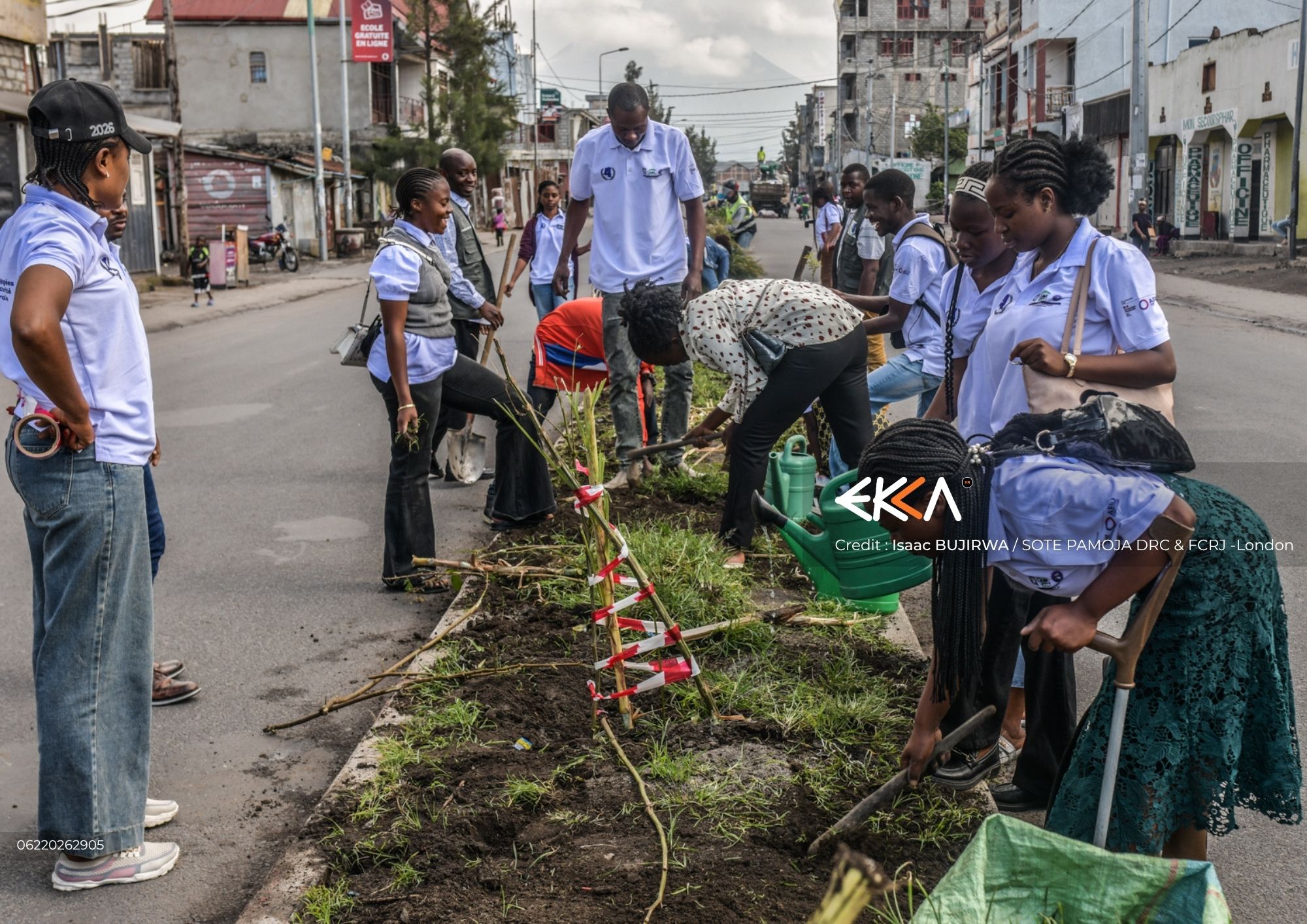
Members of FUDEI (Femmes Unies pour le Développement Endogène et Intégral), the women's organization led by coordinator Rachel Malulu, plant trees along a street median in Goma, North Kivu, Democratic Republic of Congo, on February 21, 2026. Under Malulu's leadership, FUDEI has pioneered a unique model of community peacebuilding that is both literal and symbolic transforming neglected urban spaces into living green corridors that restore public health, community cohesion, and collective pride in a city that has endured decades of armed conflict, volcanic eruptions, and mass displacement. As international negotiations over the future of eastern DRC continue to stall and restart, initiatives like this one remind the world that peace in Goma is already being built quietly, stubbornly, by women with shovels in their hands.